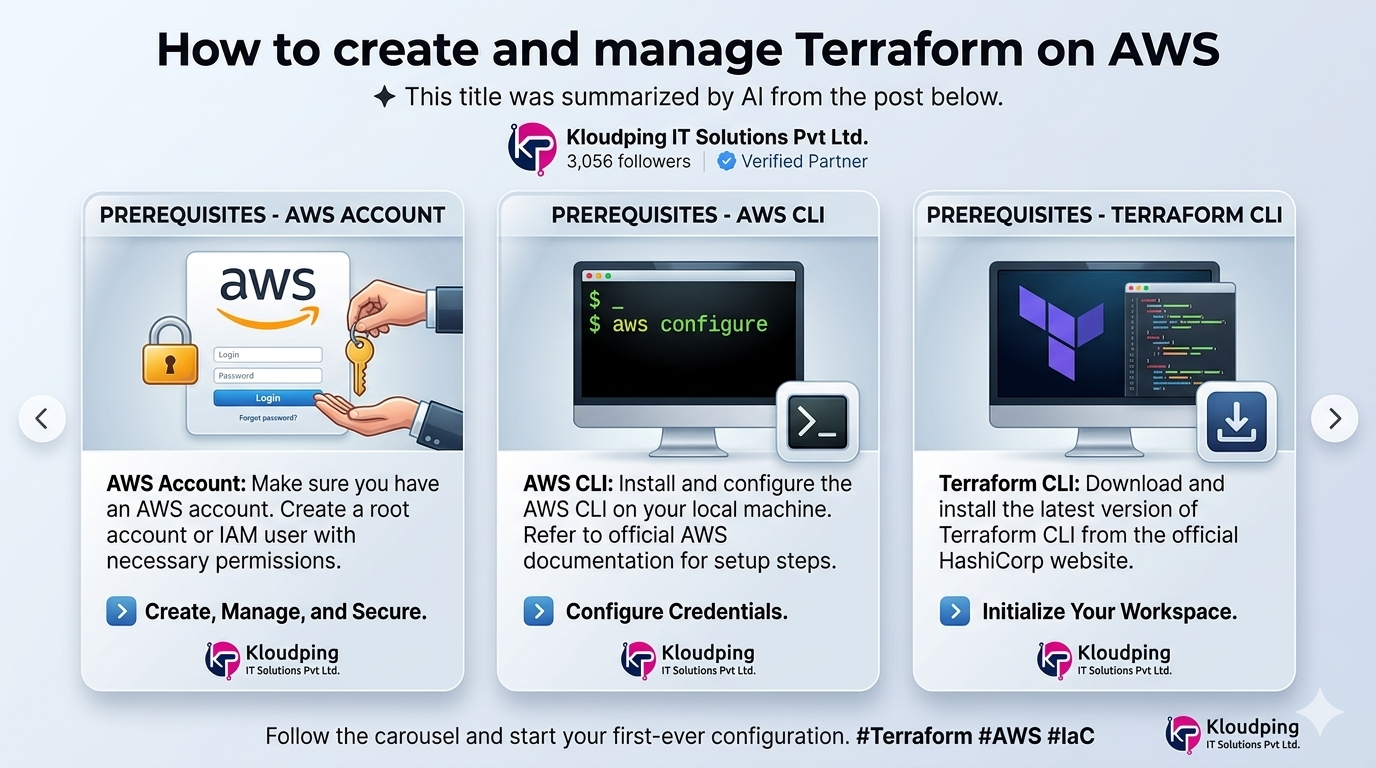
Terraform Configuration is the foundation of Infrastructure as Code (IaC), enabling teams to automate cloud infrastructure deployment with consistency and scalability. In this case study, Kloudping demonstrates how Terraform Configuration was used to build and manage AWS infrastructure efficiently.When a scaling technology firm needed to establish a secure, repeatable AWS architecture for their new platform line, they partnered with Kloudping IT Solutions. Kloudping designed and implemented a unified Infrastructure as Code (IaC) blueprint using Terraform, laying a rock-solid, production-ready cloud foundation. By adopting Terraform Configuration, Kloudping established a reliable Infrastructure as Code framework that enabled automated cloud provisioning, version control, and environment consistency. This approach reduced manual effort, improved deployment speed, and ensured that cloud resources could be replicated accurately across development, testing, and production environments.
Manual Infrastructure Challenges Before Terraform Configuration
The client was preparing to launch a suite of new applications on AWS but lacked a standardized method to provision their networking and computing environments. Setting up AWS accounts, configured Virtual Private Clouds (VPCs), IAM security boundaries, and server instances manually via the management console took days of engineering effort. This slower approach lacked auditability, risked critical misconfigurations, and made replicating identical testing or staging environments completely impossible.