




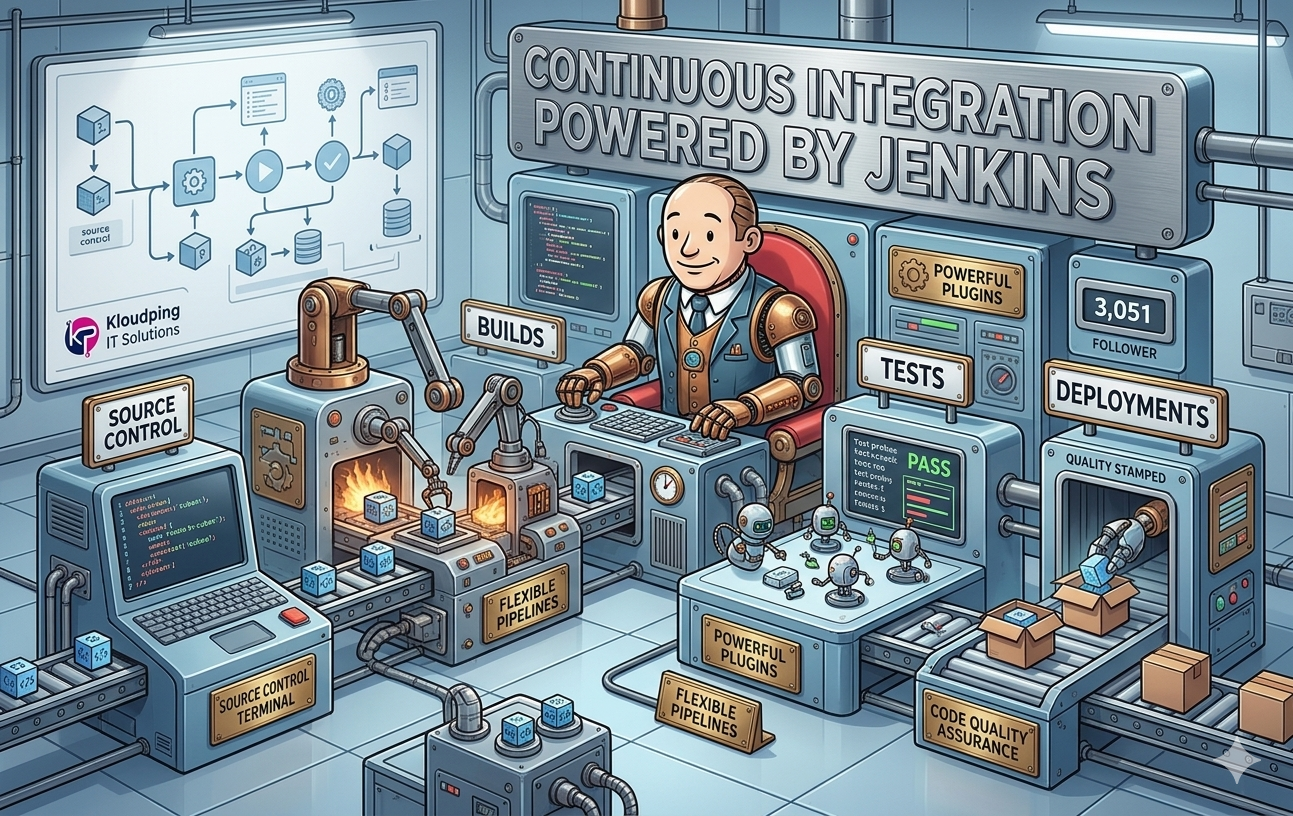






Jenkins Continuous Integration is one of the most effective approaches for automating software builds, testing, and deployment processes. In this case study, Kloudping implemented Jenkins Continuous Integration to eliminate manual bottlenecks, improve code quality, and accelerate software delivery. A leading enterprise software vendor approached Kloudping IT Solutions facing severe operational friction: their development teams were plagued by inconsistent manual builds, hidden integration bugs, and slow release cycles. Kloudping stepped in to architect a modern, fully automated Continuous Integration (CI) infrastructure to transform their software development process.
Benefits of Jenkins Continuous Integration
The Challenge: Manual Build and Deployment Challenges
The client’s development ecosystem relied on manual engineering intervention at almost every stage of the lifecycle. Code changes from various developers were integrated infrequently, leading to severe "integration hell" where bugs were detected late in the cycle. Siloed build environments meant that code quality was highly inconsistent, and tracking down the source of compilation errors wasted critical engineering hours that should have been spent on building features.
"By shifting from manual verification to Kloudping’s automated Jenkins pipelines, we completely eliminated deployment bottlenecks, boosting our development confidence from day one." — Lead DevOps Engineer, Enterprise Solutions
Engineered Extensibility with Jenkins Pipelines
Kloudping designed and deployed a robust Continuous Integration ecosystem powered by Jenkins. By leveraging the immense flexibility and extensibility of Jenkins plugins and pipeline-as-code principles, we automated the entire software pipeline from the moment a developer commits code to the repository.
- 100% Automated Builds & Testing
- Seamless Multi-Plugin Integration
- Streamlined, Error-Free Workflows